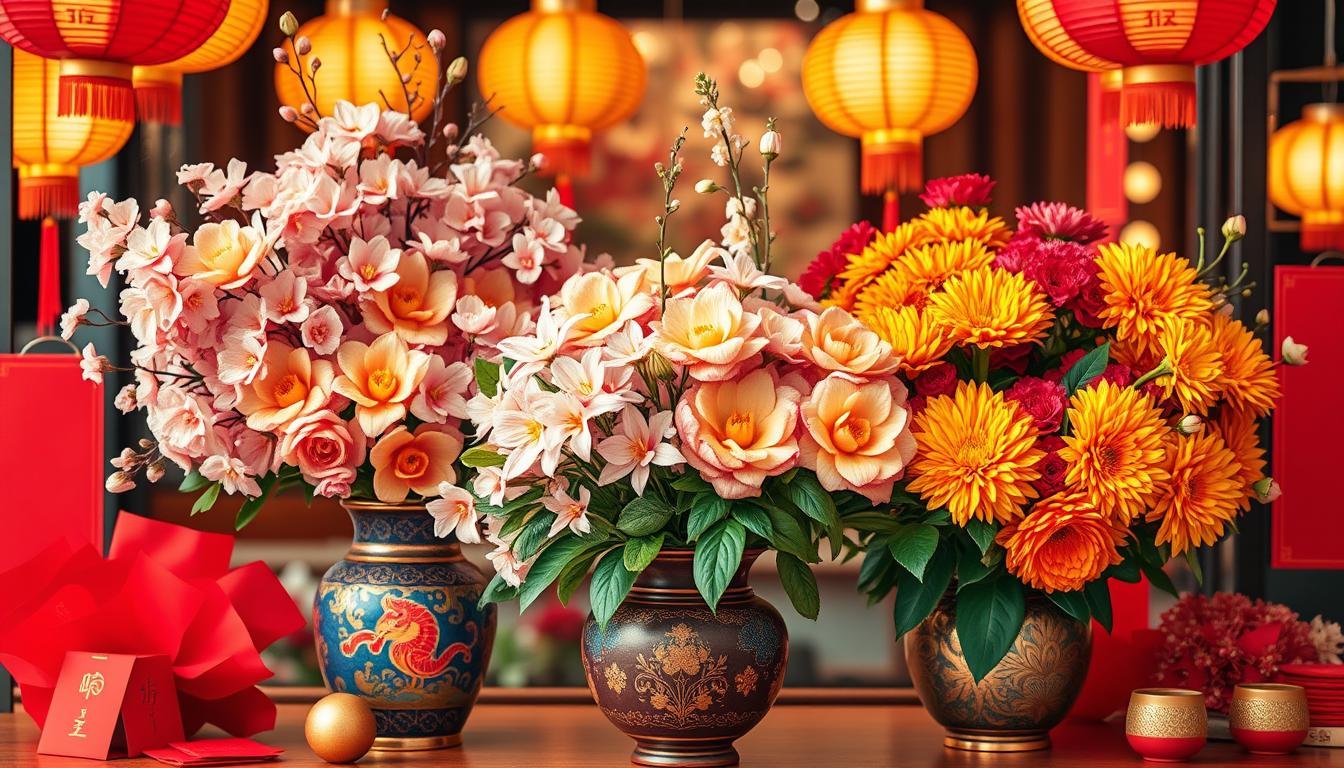
Celebrate Chinese New Year with Lucky Flowers
Did you know 70% of Chinese homes use lucky flowers for Lunar New Year? This shows how important these flowers are for welcoming good luck and prosperity. They are a big part of Chinese culture.
I’m excited to share the magical world of lunar new year flowers. These flowers are not just pretty; they carry deep meanings of hope, renewal, and abundance. They are a big part of Chinese culture.
Orchids and plum blossoms are just a few examples of these special flowers. Each one has its own message for the Spring Festival. I’ll help you pick the best flowers to bring luck and success into your year.
Decorating your home or finding the perfect gift? Knowing the meaning behind these flowers can make your celebrations even more special. Let’s see how these beautiful flowers can make your Lunar New Year more joyful and meaningful.
Key Takeaways
- 70% of Chinese households use lucky flowers for Lunar New Year decorations
- Orchids symbolize luxury and abundance during the festival
- Plum blossoms represent resilience and perseverance
- Chrysanthemums are associated with longevity and happiness
- Peach blossoms are popular among young people for attracting romantic luck
- Proper selection of lunar new year auspicious blooms can enhance your celebration’s meaning
Understanding the Significance of Chinese New Year Traditions
Chinese New Year is filled with vibrant celebrations and rich traditions. It’s a time for family reunions and welcoming good fortune. Flowers play a big role in these customs, adding to the festive spirit.
The Spring Festival’s Cultural Importance
The Spring Festival kicks off the lunar new year, celebrated by over 1.5 billion people. It’s a time to honor ancestors and welcome good fortune. In 2025, we’ll celebrate the Year of the Wood Snake, symbolizing growth and renewal.
Traditional Floral Customs During Lunar New Year
Flowers are a big part of Chinese New Year decorations, with 86% of homes using them. These flowers carry wishes for good fortune and prosperity. Peach blossoms, orchids, and peonies are the most popular, each with its own meaning.
| Flower | Symbolism | Popularity |
|---|---|---|
| Peach Blossoms | Romance and Prosperity | 40% of sales |
| Orchids | Refinement and Purity | 25% increase in preference |
| Peonies | Wealth and Abundance | Used by 60% of families |
The Role of Flowers in Chinese Culture
In Chinese culture, flowers are linked to the zodiac and elements. For the Year of the Wood Snake, plants like orchids and lucky bamboo are highlighted. These plants match the year’s wood element, making them even luckier.
Giving flowers during Chinese New Year is a special tradition. They’re often given with oranges or red envelopes, symbolizing luck and prosperity. Choosing fresh, budding flowers shows a wish for growth and new beginnings in the year ahead.
Chinese New Year Lucky Flowers: A Complete Guide
As Lunar New Year gets closer, I’m eager to share my guide to chinese new year lucky flowers. These stunning blooms are key in celebrations, bringing luck and wealth to homes in China. From bright orchids to soft plum blossoms, each flower has its own special meaning.
In Chinese culture, certain flowers are thought to attract good energy and keep bad luck away. That’s why you’ll see lots of colorful flowers during the Spring Festival. Let’s look at some of the most popular lucky flowers and what they mean:
| Flower | Symbolism | Best Placement |
|---|---|---|
| Orchids | Fertility, luxury, abundance | Living room, entryway |
| Peonies | Wealth, honor, romance | Bedroom, dining room |
| Plum Blossoms | Perseverance, hope, beauty | Study, office |
| Chrysanthemums | Longevity, vitality | Kitchen, family room |
| Narcissus | Good fortune, prosperity | Near windows, bright areas |
Making feng shui flower arrangements for prosperity is an art. I enjoy mixing different lucky flowers to boost their good effects. For instance, combining red peonies with white orchids makes a beautiful display. It shows wealth and purity.
When making your own arrangements, think about the flowers’ meanings and your wishes for the new year. Put bright flowers near doors to welcome luck, or add calm chrysanthemums to bedrooms for peaceful energy. With the right mix, you can fill your home with beauty and positive energy for a lucky year.
Orchids: The Symbol of Luxury and Abundance
Orchids are a top pick for lunar new year auspicious blooms. These elegant flowers bring luxury and abundance to Chinese New Year celebrations. I love how orchids add a touch of refinement to any space.
Different Types of Lucky Orchids
There are several orchid varieties perfect for the festivities:
- Phalaenopsis: Known for long-lasting blooms
- Cymbidium: Prized for vibrant colors
- Dendrobium: Symbolizes wealth and good fortune
- Vanda: Brings harmony and positive energy
- Oncidium: Represents joy and abundance
Proper Placement for Maximum Fortune
For feng shui flower arrangements for prosperity, place orchids in key areas. The living room is ideal for promoting harmony. Put them in the wealth corner – the farthest left from your front door – to boost financial success.
Care Tips for Orchids During Festival Season
Keep your orchids thriving with these simple tips:
- Water sparingly, allowing soil to dry between waterings
- Provide indirect light
- Maintain humidity with a pebble tray
- Fertilize monthly with orchid-specific food
By following these guidelines, your orchids will remain beautiful throughout the Chinese New Year celebrations. They will bring luck and prosperity to your home.
Peonies: The Kings of Prosperity
Peonies are the top choice for Chinese New Year lucky flowers. They have been loved in China for over 3,000 years. Their big, layered petals mean wealth and abundance, making them a hit for the Spring Festival.
Peonies hold a special place in Chinese culture. In the Tang dynasty, they were linked to the royal family. Today, Luoyang in Henan province is famous for its peonies. They celebrate these flowers with a big Peony Festival every April.
Different peony colors have their own meanings:
- Red peonies: passionate love and romance
- Pink peonies: happy marriage and good fortune
- White peonies: beauty and remorse
- Yellow peonies: new beginnings and prosperity
Red peonies are the most lucky for Chinese New Year. Their bright color means good luck and wealth. They are a top pick for decorations and gifts.
“Peonies are the embodiment of beauty and abundance, perfect for welcoming a prosperous new year.”
Here are some ways to add peonies to your Chinese New Year:
- Put a vase of red peonies by your door to welcome luck
- Give potted peonies as gifts for lasting luck
- Decorate your home or office with peony themes
Peonies need full sun and good drainage to grow well. With the right care, they will bring beauty and luck to your celebrations for many years.
| Peony Color | Symbolism | Best Use in Chinese New Year |
|---|---|---|
| Red | Passion, Good Fortune | Main decorations, Centerpieces |
| Pink | Happy Marriage, Luck | Gifts for couples, Home accents |
| White | Beauty, Purity | Complementary decorations |
| Yellow | New Beginnings, Prosperity | Office decorations, Business gifts |
Lucky Bamboo Arrangements for Good Fortune
Lucky bamboo is a favorite in Chinese culture. It’s known for bringing good fortune and harmony. Adding these elegant stalks to feng shui flower arrangements can change any space. Let’s look at the magic of lucky bamboo and its connection to chinese zodiac floral symbols.
Meaning Behind Number of Stalks
The number of stalks in a lucky bamboo arrangement is very important. Two stalks mean love, three stand for happiness, and eight are for wealth. Here’s a table to show these meanings:
| Number of Stalks | Meaning |
|---|---|
| 2 | Love and relationships |
| 3 | Happiness and family |
| 5 | Health and vitality |
| 8 | Wealth and prosperity |
Feng Shui Placement Guidelines
Putting lucky bamboo in the right spot boosts its good vibes. Place it in the wealth corner for more prosperity. The east is best for health, and the southeast for family harmony.
Caring for Lucky Bamboo
Take good care of your lucky bamboo for it to thrive. Change the water every week and keep it out of direct sunlight. With proper care, these arrangements can last 3 to 5 years. Prices start at $66.30 and go up to $134.30, with a 15% discount for buying more. A well-cared-for lucky bamboo brings continuous good fortune to your space.
Plum Blossoms: Symbols of Perseverance

Plum blossoms are a key part of the lunar new year celebrations. They bloom in the cold winter, showing strength and new beginnings. This makes them a symbol of perseverance in Chinese culture.
Plum blossoms are among the “Four Gentlemen” in Chinese art and literature. They stand alongside orchids, bamboo, and chrysanthemums. Each flower has its own cultural value, with plum blossoms representing courage and hope.
I enjoy adding plum blossoms to my Chinese New Year decorations. They are believed to bring over 75% more positivity to homes during the holiday. To keep them alive, I place them in a cool spot with indirect sunlight. I also mist them often to keep the air moist.
“The plum blossom is the first to bloom in spring, braving the cold to herald new beginnings.”
Pairing plum blossoms with other lucky flowers can make your arrangements even more meaningful. For example, combining them with red peonies for wealth or yellow chrysanthemums for longevity can boost your home’s luck for the New Year.
| Flower | Symbolism | Cultural Significance |
|---|---|---|
| Plum Blossom | Perseverance, Hope | 25% (as part of Four Gentlemen) |
| Red Peony | Wealth, Good Luck | 70% association with New Year |
| Yellow Chrysanthemum | Longevity, Wealth | 60% prevalence in arrangements |
Chrysanthemums: Harbingers of Longevity
Chrysanthemums are key in Chinese New Year lucky flowers. They symbolize wealth and long life, fitting well for spring festivals. Their long-lasting petals remind us of the lasting joy we wish for our loved ones.
Color Symbolism in Chrysanthemums
The colors of chrysanthemums hold deep meanings. Golden ones bring prosperity, while purple ones mean good luck and nobility. White chrysanthemums, though lovely, are less favored because they’re linked to grief.
Best Display Methods
I suggest placing chrysanthemums near the entrance. This is believed to draw in good health and balance for the family. They can be cut flowers in a vase or potted plants, adding a festive vibe to any home.
Traditional Beliefs and Meanings
In Chinese tradition, chrysanthemums are more than just flowers. They’re used in tea and are a big part of art and poetry. Along with bamboo, plum blossoms, and orchids, they symbolize refinement and perseverance.
When picking spring festival lucky plants, chrysanthemums are a great choice. Their deep symbolism and beauty make them a thoughtful gift and a stunning addition to New Year’s celebrations.
Peach Blossoms for Romance and Growth
Peach blossoms are a big deal in Chinese New Year. They stand for love, growth, and wealth. Young singles look for them to find love and luck in the year ahead.
I enjoy adding peach blossoms to my feng shui flower setups. Their soft petals and bright color make any space look fancy. During the festival, homes and businesses in China are filled with these flowers.
“Peach blossoms whisper promises of new beginnings and blossoming relationships.”
Want to attract love? Put peach blossom branches in your living room’s southwest corner. Giving someone a peach blossom arrangement wishes them success and growth in the new year.
When making lunar new year flowers, I mix peach blossoms with chrysanthemums or narcissus. This mix boosts good vibes and looks amazing. The secret is to balance colors and meanings.
Let peach blossoms inspire you during the Spring Festival. They remind us of the new year’s chances for love, growth, and success.
Narcissus: The Water Fairy Flower
Narcissus is a cherished flower for Chinese New Year. It’s known as the “Water Fairy Flower” or “Chinese Sacred Lily.” This flower symbolizes good fortune and prosperity. Its unique look and sweet scent make it a favorite during the Spring Festival.
Growing Narcissus for New Year
I enjoy growing narcissus for Chinese New Year. It’s a fun tradition that brings luck to our homes. Narcissus needs special care to bloom at the start of the Lunar New Year. Here’s a simple guide:
- Choose a shallow dish
- Fill it with pebbles
- Place the narcissus bulb on top
- Add water just below the bulb’s base
- Keep in a cool, dark place until shoots appear
- Move to a sunny spot and watch it grow!
Symbolic Meanings and Traditions
Narcissus holds deep meaning in Chinese culture. It stands for self-esteem, faithfulness, and new starts. Its growth in water symbolizes purity and rebirth, fitting perfectly for New Year celebrations.
| Aspect | Significance |
|---|---|
| Origin | Introduced to China before 960-1279 AD |
| Key Provinces | Fujian and Guangdong |
| Symbolic Value | Good fortune, prosperity, purity |
| Bloom Timing | Must coincide with Lunar New Year |
Growing narcissus for Chinese New Year is more than a tradition. It’s a way to welcome good fortune and new beginnings into our homes. Whether you’re experienced or new to growing, this beautiful flower adds magic to your Spring Festival celebrations.
Pussy Willows and Their Significance
Pussy willows are special in Chinese New Year. They symbolize new beginnings and growth. This makes them ideal for welcoming spring.
In southern China, they replace plum blossoms in decorations. Their name, Zhang Liu, means “money flowing” in Mandarin. This adds to their charm during the New Year. Pussy willows are also important for those born in the Year of the Snake.
Here are some ways to use pussy willows in your decor:
- Place a vase of pussy willow branches near your entrance to welcome good fortune
- Create a wreath using pussy willows and other auspicious flowers
- Combine pussy willows with golden blooms for a stunning centerpiece
To keep your pussy willow branches fresh, change the water every few days. Also, trim the stems regularly. With care, they will bring joy and luck to your home all season.
“Pussy willows are thought to be extremely lucky when they sprout new shoots and leaves, representing growth and prosperity.”
Pussy willows add elegance and cultural significance to your Chinese New Year celebrations. Their beauty and symbolism make them essential for the lunar new year.
Creating Auspicious Flower Arrangements
Making feng shui flower arrangements for prosperity is an art. It mixes old traditions with new styles. I enjoy finding Chinese New Year lucky flowers to make beautiful displays that bring luck and happiness.
Color Combinations for Luck
I pick auspicious colors for my arrangements. Red means luck, and gold means wealth. I mix bright oranges with deep greens for a happy feel. These colors are important in Chinese New Year decor, welcoming a lucky year.
Traditional Arrangement Styles
I love making classic designs like the “Three Friends of Winter” arrangement. It has pine, bamboo, and plum blossoms, showing strength and long life. Another favorite is the Imperial Blossoms Vase, with peonies that mean honor and plenty.
Modern Interpretations
For something new, I make arrangements like the Auspicious Willow Blooms. It mixes fresh pussy willows with gold, showing new beginnings and wealth. The Fortune Bamboo Table Centerpiece is also modern, with mandarin oranges for extra luck.
| Flower | Symbolism | Best Use |
|---|---|---|
| Orchids | Fertility, Wealth | Centerpieces |
| Peonies | Good Fortune | Large Arrangements |
| Chrysanthemums | Longevity | Accent Flowers |
By choosing Chinese New Year lucky flowers carefully, I make displays that are beautiful and meaningful. Each flower is a sign of hope and wishes for the new year.
Gifting Lucky Flowers: Etiquette and Customs
During Chinese New Year, giving lucky flowers is a big tradition. It’s different from Western customs and holds deep meaning. Picking the right flowers for each person is key, based on their age and how you know them.
Remember, red and gold flowers are the luckiest. Peonies and orchids mean wealth and class, so they’re favorites. But, stay away from white flowers as they’re unlucky.

Here’s a guide to help you choose the perfect chinese new year lucky flowers:
| Flower | Symbolism | Best for |
|---|---|---|
| Peonies | Wealth, honor | Elders, bosses |
| Orchids | Refinement, luxury | Colleagues, friends |
| Plum blossoms | Perseverance, courage | Anyone facing challenges |
| Peach blossoms | Romance, growth | Young singles |
Timing is everything when giving flowers. The first and last days of the 15-day celebration are best for gifts. Say auspicious wishes for a prosperous year ahead.
For a modern touch, give potted plants or creative flower arrangements. These gifts are lasting and respect the culture. The thought behind the gift matters just as much as the flowers.
Preserving Lucky Flowers Throughout the Festival
Keeping Chinese New Year lucky flowers bright is key for their good luck energy. I’ll share tips for different lucky plants to keep them looking great during the festival.
Care Tips for Different Varieties
Orchids, the top Chinese New Year flower, need bright, indirect light and should be watered carefully. Peonies like cool temperatures and need to be watered often. Chrysanthemums do best in full sun and should be watered when the soil is dry.
Plum and peach blossoms need cool temperatures and regular misting. Narcissus bulbs should be kept cool and their water changed often. Lucky bamboo prefers low light and its water should be changed weekly.
Extending Bloom Life
To make cut flowers last longer, trim stems at an angle and change the water daily. Add a floral preservative or a teaspoon of sugar to the water. Keep arrangements away from direct sunlight and heat.
For potted plants, keep the soil moist and the air humid.
| Flower Type | Light Preference | Watering Frequency | Temperature |
|---|---|---|---|
| Orchids | Bright, indirect | Once a week | 60-75°F |
| Peonies | Full sun to partial shade | Every 3-4 days | 50-65°F |
| Chrysanthemums | Full sun | When soil is dry | 60-70°F |
| Plum Blossoms | Full sun to partial shade | Every 2-3 days | 45-60°F |
| Narcissus | Bright, indirect | Every 2-3 days | 50-65°F |
By following these tips, your Chinese New Year lucky flowers will stay beautiful and bring good luck all festival season.
Combining Flowers with Other Lucky Decorations
I enjoy making feng shui flower arrangements for Chinese New Year. It’s fun to mix old traditions with fresh flowers for a lively feel. Red lanterns and golden chrysanthemums together symbolize wealth and keep evil away.
Paper cuttings and lucky characters add a creative touch to flower displays. I place orchids, the favorite New Year flower, near these to bring good luck. For a modern look, I mix lucky bamboo with modern art, blending old and new.
Chinese zodiac flowers are key in my designs. I use peonies, the “flower of riches and honor,” with red or gold silk placemats. This mix makes a beautiful table that welcomes prosperity.
| Flower | Symbolism | Pairing |
|---|---|---|
| Orchids | Good fortune | Red lanterns |
| Peonies | Wealth | Gold coins |
| Plum blossoms | Endurance | Spring Festival couplets |
| Narcissus | Prosperity | Kumquat trees |
By carefully mixing flowers with traditional decorations, I make displays that welcome luck and wealth for the New Year.
Conclusion
Reflecting on Chinese New Year lucky flowers, I see a world of meaning. These flowers are more than decorations; they symbolize hope, prosperity, and culture.
Orchids stand for luxury, while plum blossoms show resilience. Each flower has its own special role in the celebrations. Did you know orchids are a big hit, making up 25% of all flower sales during this time?
The tradition of Chinese New Year lucky flowers is rich. Lucky bamboo, for example, has special meanings. Two stalks mean double luck, and five mean good health. This shows how these customs connect us to ancient wisdom.
When we decorate with these flowers, we’re doing more than just beautifying our homes. We’re welcoming blessings, honoring tradition, and planting seeds of hope for the future. May your celebrations be filled with the beauty and promise of these auspicious flowers.
FAQ
What are the most popular Chinese New Year lucky flowers?
Popular Chinese New Year lucky flowers include orchids, peonies, and lucky bamboo. Also, plum blossoms, chrysanthemums, peach blossoms, narcissus, and pussy willows are favorites. Each flower has its own meaning and is believed to bring good fortune.
How do I choose the right lucky flower for Chinese New Year?
Think about the luck you want to attract. Orchids symbolize luxury, while peonies represent prosperity. Peach blossoms are linked to romance. Consider the recipient’s age and your relationship with them.
What is the significance of lucky bamboo in Chinese New Year celebrations?
Lucky bamboo brings good fortune and resilience. The number of stalks has different meanings. Two for love, three for happiness, five for wealth, and eight for prosperity. It’s also great for feng shui, attracting positive energy.
How can I create an auspicious flower arrangement for Chinese New Year?
Use lucky colors like red and gold. Mix flowers like orchids, peonies, and plum blossoms. Avoid unlucky numbers and traditional styles like the “three friends of winter.” Place it in a good spot according to feng shui.
How do I care for Chinese New Year flowers to keep them fresh throughout the festival?
Change the water and trim stems at an angle every few days. Keep them away from sunlight and heat. For potted plants, water properly and avoid overwatering. Each plant has its own care needs.
What is the etiquette for gifting flowers during Chinese New Year?
Choose auspicious flowers and colors. Avoid white, linked to funerals. Give the flowers with both hands and include a red envelope with money. Wish the recipient a happy New Year.
Can I combine lucky flowers with other Chinese New Year decorations?
Yes! You can mix lucky flowers with decorations like red lanterns and paper cuttings. For example, place an orchid arrangement with a “fu” character or lucky bamboo with red envelopes and mandarin oranges.
What are some feng shui tips for placing lucky flowers in my home?
Place flowers in the right areas based on the bagua map. For example, put peonies in the southeast for wealth. Avoid bedrooms and bathrooms. Keep flowers fresh and remove them when they wilt.
Are there any flowers I should avoid during Chinese New Year?
Yes, avoid white flowers as they symbolize funerals. Also, don’t give clocks or timepieces with flowers, as they’re unlucky.
How can I incorporate Chinese zodiac floral symbols into my New Year decorations?
Choose flowers linked to the current zodiac animal. For the Year of the Rabbit, use lilies or snapdragons. Decorate with elements featuring the zodiac animal with your floral arrangements.
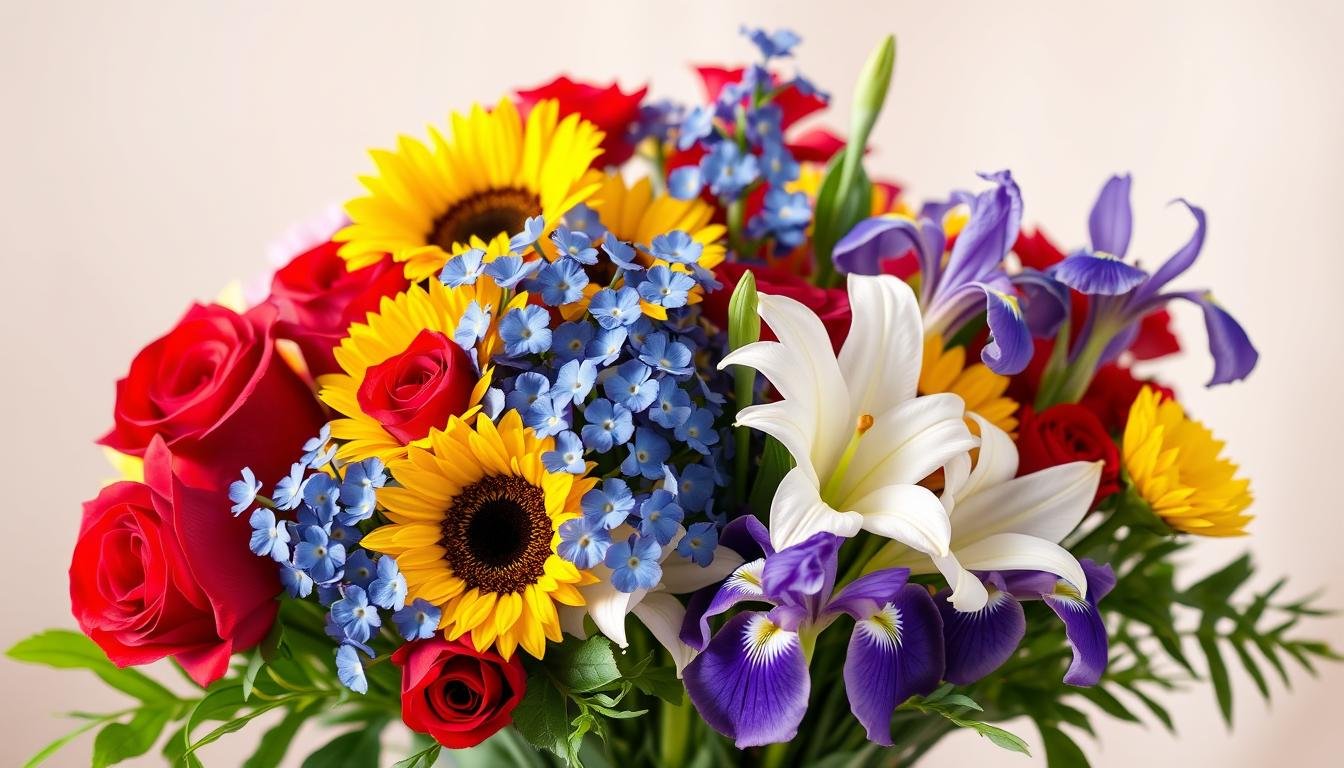
Unveil Secrets with Our Guide to Flower Meanings
Welcome to our flower symbolism guide. It’s your key to understanding the secret language of flowers. Flowers, with their bright colors and shapes, have long sent messages of love and feelings. Whether it’s the romantic red rose or the calm bluebell, each flower has its own story.
In this guide, we explore the history and meanings of many flowers. We help you discover the hidden messages they share.
Key Takeaways
- The language of flowers has deep-rooted historical and cultural significance.
- Every flower holds a unique meaning and story.
- Understanding flower meanings can enrich personal relationships and celebrations.
- Different cultures interpret flower symbolism in distinct ways.
- The colors of flowers also affect their symbolic meanings.
The History and Origins of Flower Symbolism
Flower symbolism has ancient roots in many cultures. These cultures linked meanings to different flowers. This has shaped the rich world of floral symbolism we know today.
The Beginnings in Ancient Cultures
In ancient times, flowers held deep meanings. Egyptians used lilies in burials to symbolize purity and the afterlife. The Greeks linked many flowers to their gods and myths. For example, the anemone was tied to the story of Adonis.
Influences of Different Civilizations
As time went on, other cultures added their own meanings to flowers. The Romans, blending with Greek culture, gave new meanings to flowers like the rose. It now symbolizes love and beauty. In China, peonies symbolize wealth and honor, showing how flower meanings spread and varied.
Transition into Modern Times
Floral symbolism has evolved over time, mixing old traditions with new views. In the Victorian era, the language of flowers, or floriography, allowed people to send secret messages. Today, flowers are a powerful way to express feelings and tell stories.

Understanding the Language of Flowers
Exploring the world of flower language, we find out how flowers share deep messages. They do this without using words, reaching across time. The history of flowers is rich, with a big impact from the Victorian Era.

The Victorian Era Influence
In the Victorian Era, flowers became a secret way to talk. People used floral dictionaries to learn flower meanings. They made special bouquets, called tussie-mussies, to send secret messages.
Each flower and arrangement had its own special meaning. This way, lovers and friends could share feelings without words.
How Flowers Communicate Messages
Flowers send messages through their colors, types, and how they’re arranged. For example, red roses mean deep love and passion. White lilies stand for purity and innocence.
Knowing flower language lets us share feelings without words. This tradition shapes how we use flowers today. It adds deeper meaning to our personal and special moments.
“Flowers are the sweetest things God ever made and forgot to put a soul into.” – Henry Ward Beecher
Popular Flower Meanings Explained
Many flowers are famous for their deep meanings and cultural importance. These flowers connect us to history, sharing feelings that words can’t. Let’s explore the stories and meanings behind these symbolic flowers.
The Symbolism of Roses
Roses are the most famous flowers worldwide. A red rose means deep love and passion, perfect for expressing love. White roses, on the other hand, stand for purity and innocence, often seen at weddings. Each rose color has its own story, adding depth to flower meanings.
The Meaning Behind Lilies
Lilies are highly respected in many cultures. They symbolize purity and renewal. White lilies are often seen at funerals, representing the soul’s innocence. They also appear in wedding bouquets, showing the renewal of love.
Secrets of Tulips
Tulips are known for their bright colors and elegance. Red tulips represent perfect love, similar to red roses but with a unique twist. Purple tulips symbolize royalty, while yellow tulips now bring joy and happiness. This shows how flower meanings can change over time.
Flower Meanings in Different Cultures
The significance of flowers is deeply rooted in many cultures worldwide. In India, marigolds are bright and full of life. In Japan, cherry blossoms are delicate and fleeting. Each flower has its own special message and meaning. The cultural flower symbolism creates a rich tapestry that shows the traditions and beliefs of a people.
| Culture | Flower | Symbolism |
|---|---|---|
| Japan | Cherry Blossom | Ephemeral beauty, the transience of life |
| Mexico | Marigold | Honor, remembrance, used during Dia de los Muertos |
| India | Lotus | Purity, beauty, divinity |
| Egypt | Blue Lotus | Rebirth, spiritual enlightenment |
| Greece | Olive Branch | Peace, victory |
These examples show just a small part of how cultural flower symbolism can carry deep meanings and emotions. The importance of flowers changes a lot, showing each culture’s view on life and nature. By understanding these symbolisms, we can see how flowers deeply impact cultural histories and traditions worldwide.
How to Use Flower Symbolism in Everyday Life
Flower symbolism can make our lives richer, from quiet moments to big celebrations. By knowing the meanings of flowers, we can pick the best ones to share feelings and messages. This way, we can express ourselves with elegance and subtlety.
In Personal Relationships
Choosing the right flowers can say a lot in personal relationships. For example, red roses are a classic choice for showing love and passion. They’re great for romantic moments.
Daisies, with their meanings of innocence and purity, are perfect for friends or kids. They show a simple yet deep connection.
Flowers can also share complex feelings without words. Chrysanthemums, for instance, stand for loyalty and honesty. They’re a thoughtful pick for someone you trust deeply.
In Celebrations and Events
Flowers are key in celebrations like weddings, funerals, and birthdays. For weddings, lilies and white roses are popular. They symbolize purity, commitment, and eternal love.
At funerals, marigolds might be a better choice. They represent grief and sorrow. But they also show respect and remembrance, adding beauty to solemn moments.
Knowing flower symbolism helps us pick the right blooms for every event. It lets us share feelings that words can’t always express.
The Role of Color in Flower Symbolism
Flowers come in many colors, each with its own meaning. They help us send messages and feelings. Knowing what each color means can make giving flowers even more special. Let’s explore the meanings behind different flower colors.
Red Flowers
Red flowers are all about passion and love. Their bold color makes them perfect for showing strong feelings. Whether it’s a bouquet of red roses or a single red tulip, red flowers are the choice for love.
White Flowers
White flowers are clean and elegant, symbolizing purity and innocence. They’re often picked for weddings, showing new beginnings and a pure bond. White flowers also express respect and remembrance in a calm way. White flowers are known for their grace and beauty.
Yellow Flowers
Yellow flowers are full of warmth and joy, standing for happiness and friendship. Their bright color is great for celebrating with friends or cheering someone up. From sunflowers to daffodils, yellow flowers bring positive vibes and hope. Yellow flowers are all about spreading joy and happiness.
Symbolic Meanings of Less Common Flowers
Roses and lilies are often talked about when it comes to flower symbolism. But, there’s a world of unique meanings in less common blooms. These rare flowers tell their own stories, adding a new twist to giving flowers and decorating.
The Bluebell is a flower that’s often overlooked but full of meaning. It stands for humility and constant love. Its soft blue color and bell shape make it a special choice for showing lasting love.
The Lotus is another flower with deep symbolism. It’s linked to purity, enlightenment, and rebirth. In Eastern cultures, the lotus is a symbol of spiritual growth, adding deep meaning to any space.
The Bird of Paradise flower is all about freedom and joy. It’s perfect for celebrations or adding a unique touch to any arrangement. Its bright colors and shape bring a sense of the exotic to any event.
The Hellebore, or Christmas rose, has a unique symbolism. It means both serenity and scandal. Its presence in decor can add mystery and allure, perfect for expressing complex feelings.
These lesser-known flowers offer a chance to explore beyond the usual. Each has its own unique meaning, making them a fresh way to express feelings and enhance your floral arrangements.
The Psychological Impact of Flowers and Their Meanings
Flowers have a deep impact on our emotions and mental state. They can show empathy and comfort us. The effects of flowers on our minds are truly powerful.
Emotional Connections
Flowers help us connect on a deep emotional level. They say things words can’t. For example, roses show deep love and admiration. Lilies symbolize purity and a renewed soul.
Studies show flowers make us happy and lower stress. Their beauty and scent can instantly brighten our mood.
Therapeutic Uses
Flowers have real therapeutic benefits. They can lower anxiety and improve our well-being. Flowers like lavender and chamomile are used in aromatherapy to relax and reduce stress.
Here is a detailed look at several flowers and their therapeutic properties:
| Flower | Therapeutic Meaning | Psychological Effects |
|---|---|---|
| Lavender | Calm and Serenity | Reduces Anxiety |
| Chamomile | Relaxation | Alleviates Stress |
| Rose | Love and Compassion | Enhances Happiness |
Flower Meanings in Literature and Art
The study of floral symbolism in literature reveals a world of deep meanings and feelings. Flowers are often used as symbols, representing love, death, and new beginnings. William Shakespeare, for example, used flowers in his works. In “Hamlet,” Ophelia gives flowers with special meanings, showing her complex emotions.
In the world of art, flowers add layers of meaning. Claude Monet’s water lily paintings are famous for capturing the fleeting beauty of flowers. These vibrant works bring peace and remind us of life’s shortness.
Vincent van Gogh also used flowers in his art. His sunflower paintings show the joy and challenges of life. Through color and shape, he turned simple flowers into powerful symbols of emotion.
- Shakespeare’s “Hamlet” – Ophelia and Her Flowers
- Claude Monet’s Water Lilies
- Vincent van Gogh’s Sunflowers
In “The Picture of Dorian Gray” by Oscar Wilde, floral symbolism in literature highlights the contrast between beauty and corruption. Flowers symbolize purity but also reflect the main character’s moral decline.
Modern literature also explores flower symbolism. In “The Color Purple” by Alice Walker, flowers symbolize growth and strength. Purple flowers represent the main character’s journey to self-discovery and healing.
Flowers in both art and literature show their powerful symbolic role. They convey universal human experiences and emotions.
The Differences Between Eastern and Western Flower Symbolism
Flower symbolism has different meanings in Eastern and Western cultures. Knowing these differences helps us see the beauty of flower meanings across cultures.
Eastern Interpretations
In Eastern cultures, flowers like the lotus are very important. The lotus symbolizes purity, enlightenment, and rebirth. This is because it blooms clean from muddy waters, reflecting Buddhist and Hindu beliefs.
Chrysanthemums, on the other hand, mean longevity and rejuvenation. They are deeply valued in Chinese culture, showing respect for nature’s cycles.
Western Interpretations
In the West, flowers are often linked to love and emotions. Roses, for example, are seen as symbols of love and passion. The focus is on their beauty and how they make us feel.
Daisies represent innocence and purity in the West. They carry a special meaning that is different from their Eastern counterparts.
These different views on flowers show the interesting world of Eastern vs. Western flower meanings. They help us understand these old traditions better.
Creating a Flower Arrangement with Symbolic Flowers
Making symbolic flower arrangements is a beautiful way to send messages through flowers. It’s perfect for celebrations, personal gestures, or healing rituals. Knowing the flower arrangement significance helps your display convey deep meanings.
Choosing Flowers for the Occasion
Think about the event’s nature when picking flowers. Each flower has its own meaning. For example, roses mean love and passion, great for romantic events. Lilies stand for purity and renewal, perfect for weddings and baby showers.
Make sure your symbolic flower arrangements match the feelings you want to share.
Arranging Tips for Maximum Impact
Creating a stunning display needs both beauty and meaning. Start with a main flower, like a rose or lily, as the centerpiece. Then, add smaller flowers around it to enhance the message.
Also, think about the colors. Red means passion, white is purity, and yellow shows friendship. Mixing these colors makes your arrangement both beautiful and meaningful.
| Flower | Symbolism | Occasion |
|---|---|---|
| Roses | Love and Passion | Romantic Events |
| Lilies | Purity and Renewal | Weddings and Baby Showers |
| Sunflowers | Adoration and Loyalty | Friendship and Harvest Festivals |
| Tulips | Perfect Love and Rebirth | Spring Celebrations |
Flower Meanings in Modern-Day Gift Giving
Knowing the meanings of flowers is key to sending the right message. The right flowers can make any occasion special and deepen the bond with the person you’re giving them to.
Choosing the Right Flowers
Choosing flowers as gifts is more than just picking pretty ones. Each flower has its own meaning. For example, roses mean love, while lilies stand for purity. Think about the person and the event when picking flowers.
It’s also important to know cultural meanings. Chrysanthemums, for instance, are for mourning in some cultures. So, pick flowers that fit the occasion and the person’s culture.
Avoiding Common Mistakes
Knowing what not to do is just as important. Here are some tips:
- Don’t use the wrong color flowers; yellow can mean jealousy or infidelity.
- Know the full meaning of flowers to avoid misunderstandings, like white lilies at non-funeral events.
- Choose fresh, well-arranged flowers to show you care.
By understanding flower meanings and cultural contexts, we can give gifts that are truly valued and appreciated.
Flower Meanings
We’ve put together a detailed flower meanings chart. This guide to flower meanings explains the messages behind your favorite flowers. It shows what they mean in different situations.
| Flower | Meaning |
|---|---|
| Roses | Love, Passion |
| Lilies | Purity, Renewal |
| Tulips | Perfect Love, Elegance |
| Daisies | Innocence, Cheerfulness |
| Orchids | Luxury, Beauty |
| Sunflowers | Adoration, Loyalty |
| Irises | Wisdom, Valor |
| Chrysanthemums | Friendship, Well-being |
| Peonies | Prosperity, Romance |
| Lavender | Calm, Healing |
| Marigolds | Warmth, Passion |
Conclusion
As we wrap up our look at significance of flower symbolism, we see the deep meanings in every flower. Learning about flower meanings makes us appreciate nature’s way of sharing feelings and messages. From ancient times to today, flowers have been a silent but powerful language.
In this guide, we explored the history, cultural differences, and emotional impact of flowers. We learned how flowers like roses, lilies, and tulips carry special meanings. Knowing these meanings helps us share our feelings, like love or celebration, through flowers.
Let’s keep exploring the world of flower symbolism in our everyday lives. It’s a beautiful way to connect and share feelings at any event. By learning and sharing these meanings, we honor the beauty of flowers and our ability to express deep emotions.
FAQ
What is the symbolism of flowers?
Flowers carry deep meanings and messages. Each flower has its own special significance. This is shaped by history, culture, and literature.
Where did the meanings of flowers originate?
Ancient cultures like the Egyptians, Greeks, and Romans started assigning meanings to flowers. These meanings have evolved over time, shaping our understanding today.
How did the Victorian Era influence the language of flowers?
In the Victorian Era, flowers were used to express feelings through bouquets called tussie-mussies. Floral dictionaries became common. This created a language we use today.
What are some popular flower meanings?
Red roses mean love, lilies represent purity, and tulips symbolize prosperity. These meanings come from history and culture, adding depth to each flower.
Do flower meanings vary in different cultures?
Yes, meanings can change across cultures. For example, the lotus is sacred in Eastern traditions, while poppies remember the dead in the West. This shows the rich diversity of flower symbolism.
How can we use flower symbolism in everyday life?
We can use flower symbolism to share feelings in personal relationships. It also adds to the joy of celebrations. Choosing flowers wisely lets us express love, sympathy, and joy.
What role does color play in flower symbolism?
Color is key in flower symbolism. Red flowers mean passion and love, white ones purity, and yellow friendship and joy. The color can change or enhance a flower’s message.
What are the symbolic meanings of less common flowers?
Uncommon flowers have unique meanings. Anemones mean anticipation or fading hope, and bluebells represent humility. These flowers add interest to arrangements and gifts.
What is the psychological impact of flowers and their meanings?
Flowers can show empathy, strengthen bonds, and boost well-being. Studies show they can improve mood, reduce stress, and have healing effects.
How are flowers used symbolically in literature and art?
Flowers symbolize complex themes and emotions in literature and art. Shakespeare used them in his plays, and artists like Van Gogh expressed feelings through flowers in their work.
What are the differences between Eastern and Western flower symbolism?
Eastern and Western cultures view flowers differently. The lotus is sacred in the East, while red roses symbolize love in the West. These differences show the diverse appreciation of flowers worldwide.
How can we create flower arrangements with symbolic flowers?
Start by picking flowers that match the message you want to send. Then, arrange them thoughtfully. This way, your arrangement will convey the intended sentiment, whether for a gift or event.
How do we choose the right flowers for gift-giving?
Think about the recipient’s tastes and the occasion. Knowing flower meanings helps avoid mistakes. This ensures your gift conveys the right sentiment.
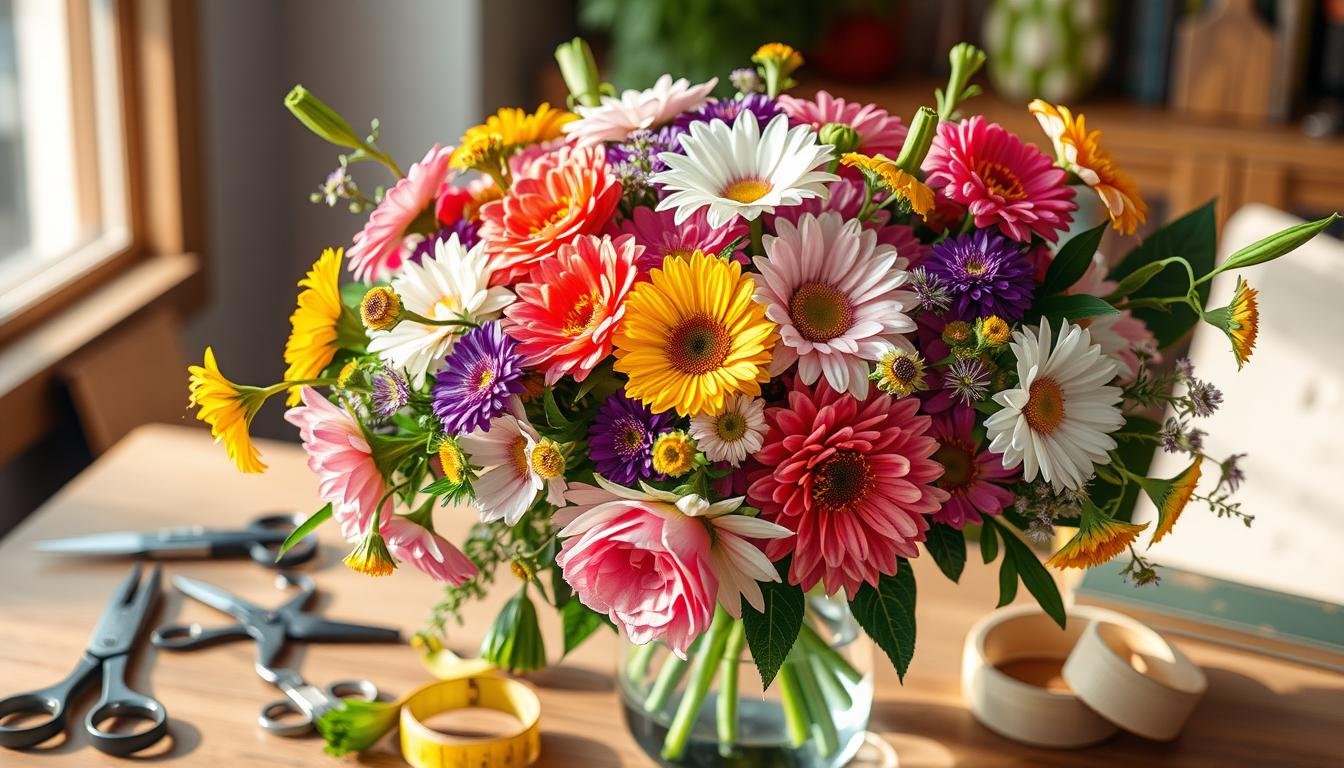
Top Tips for Arranging Flowers Like a Pro
The art of flower arranging is more than just putting flowers in a vase. It’s a blend of creativity, precision, and knowledge. When done well, it can make any space look elegant and beautiful. This guide will share expert tips and techniques to improve your flower arranging skills, whether you’re a pro or just starting out.
Let’s explore how to create stunning bouquets that show off your personal style. We’ll bring the beauty of nature indoors together.
Key Takeaways
- Grasping the fundamentals of floral arrangements enhances your crafting abilities.
- Selecting the right flowers is key for a professional look.
- Understanding color schemes can make your bouquet stand out.
- Preparation and the right tools are essential for smooth arrangements.
- Learn how to make your flowers last longer.
- Discover ways to mix different stems and textures for eye-catching displays.
Understanding the Basics of Floral Arrangement
Learning the basics of floral arrangement is key for anyone into floristry. It involves knowing the types of flowers, color schemes, and the tools needed for preparation.
Choosing the Right Flowers
Choosing the right flowers is the first step in floral arrangement. Think about the occasion, the person’s taste, and the flower’s meaning. Also, pick flowers that match in size and type.

Determining Color Schemes
Choosing the right colors is vital in floristry. Pick colors that go well together. For example, a single color can look elegant, while different colors can add excitement. Knowing color theory helps a lot.
Preparation and Tools Needed
Good flower arrangement starts with the right tools. You’ll need scissors, wire cutters, floral tape, and a strong vase. These tools help make your arrangement look great and last longer.
| Tool | Purpose |
|---|---|
| Floral Scissors | Cutting stems at an angle for better water absorption |
| Wire Cutters | Trimming thick stems and floral wires |
| Floral Tape | Securing flowers and greenery in place |
| Vase | Holding the arrangement securely |
Mastering these techniques and using the right tools helps create stunning floral designs.
Essential Tips for Arranging Flowers
Arranging flowers is more than just putting blooms in a vase. It needs detail, creativity, and secret tips from pros. Here are key tips to improve your skills.

First, think about your design’s size. A good rule is to make your arrangement’s height at least 1.5 times the vase’s height. This ensures a balanced look.
Then, layering is key. Start with greenery as a base. Next, add big flowers, then smaller ones for texture. This layering is a top secret in flower arranging.
Let’s look at some common techniques in the table below:
| Technique | Description |
|---|---|
| Layering | Building a base with greenery and adding focal flowers |
| Color Blocking | Group similar colored flowers to create distinct sections |
| Asymmetry | Arrange flowers to shift weight and create visual interest |
Also, make sure flowers have room to breathe. Too many flowers can make each one look worse and shorten their life. Lastly, turn your arrangement as you work to check for balance.
By using these tips, you can make your flower arrangements better. They will impress everyone, whether for your home or special events. Learning these techniques will make your arrangements always look great.
Selecting the Perfect Vase
Choosing the right vase is key for a stunning bouquet display. You need to think about the vase’s size, shape, and style. This ensures it fits your arrangement perfectly.
- Size and Shape: The vase should fit the flowers’ height and volume. A tall vase is great for long-stemmed flowers. A short, wide vase is best for fuller arrangements.
- Material of the Vase: The vase material should match the flowers. Clear glass vases are versatile and let the flowers shine.
- Proportion and Scale: The vase must be the right size for the flowers. A vase that’s too big or too small can mess up the look.
| Aspect | Tip |
|---|---|
| Size | Choose a vase that’s between one-half to two-thirds the height of the tallest flower stem for balanced proportions. |
| Shape | Think about the flower arrangement style. A round vase is good for symmetrical designs. A vase with a narrow neck is better for spreading, informal bouquets. |
| Material | Pick materials that match or enhance your flower’s look. Metal adds a modern touch, while ceramic gives a classic feel. |
| Color | Neutral-colored vases let the flowers be the main focus. Brightly colored vases can make bold statements. |
In conclusion, choosing the right vase can make your bouquet display stand out. Remember these tips when creating your next floral masterpiece.
Choosing Fresh Flowers for Your Bouquets
Getting the best blooms for your bouquets starts with picking quality flowers. It’s important to check each flower carefully and use seasonal blooms. This way, you can make stunning and lasting bouquets.
Inspecting Flower Quality
To pick the freshest flowers, we need to be careful. First, look at the petals. They should be firm and brightly colored. If petals are wilted or off-color, the flowers are old.
Then, check the stems. Good flowers have strong, flexible stems without damage. Also, the leaves should be green and healthy, not yellow or brown.
Lastly, smell the flowers. Fresh ones smell good, while old ones might not or smell bad. By doing these checks, we can find the freshest flowers for our bouquets.
Using Seasonal Flowers
Using seasonal flowers is good for both looks and the planet. Seasonal flowers are at their best because they grow naturally. This means they are vibrant and strong.
Seasonal flowers also help local farmers and cut down on carbon emissions. By choosing flowers that match the season, we make beautiful, eco-friendly bouquets.
| Season | Flowers | Benefits |
|---|---|---|
| Spring | Tulips, Daffodils, Cherry Blossoms | Fresh, vibrant colors, supports local growers |
| Summer | Sunflowers, Roses, Lilies | Peak bloom, strong stems, vibrant hues |
| Fall | Chrysanthemums, Dahlias, Marigolds | Rich colors, hearty blooms, seasonal freshness |
| Winter | Poinsettias, Amaryllis, Holly | Festive appeal, supports local growers, refreshing scent |
By focusing on flower quality and using seasonal blooms, we can make our bouquets better. They will stay fresh and beautiful for longer.
Creating Visual Balance in Your Arrangement
Getting visual balance in arrangements is key to a stunning floral display. The height of stems is critical, with the tallest at the back for balance. The rule of thirds is a great way to keep things even, dividing the display into three parts.
Evenly spreading flowers and foliage is vital to avoid a lopsided look. This ensures your arrangement doesn’t look too heavy or uneven. Mixing flower sizes and types adds depth and beauty to your display.
Here are some practical flower arranging ideas for balance:
- Alternate flower heights for a natural look.
- Use foliage to fill gaps and make the arrangement fuller.
- Place focal flowers strategically to catch the eye.
Let’s compare two key techniques in the table below:
| Technique | Description |
|---|---|
| Rule of Thirds | Divides the arrangement into three balanced sections: base, middle, and upper. |
| Volume Distribution | Evenly spreads flowers and foliage to achieve harmony and avoid top-heaviness. |
Using these flower arranging ideas can make your displays look great and professional. Focus on the height and volume to master visual balance in arrangements. This way, your floral creations will be both captivating and harmonious.
Incorporating Different Stems and Textures
Creating stunning floral arrangements is more than just picking beautiful flowers. It’s about mixing different stems and textures. This makes your bouquets look sophisticated. We’ll show you how to mix flower types and greens for amazing results.
Using Fillers and Greens
Fillers and greens add volume and depth to your arrangements. They create a lush background that highlights the main flowers. From delicate ferns to strong eucalyptus, each adds its own texture and color.
- Greenery like eucalyptus and ferns softens bold blooms.
- Ornamental grasses add a whimsical touch.
- Berry sprigs bring color and texture.
Mixing Flower Types
Mixing different flower types creates stunning bouquets. The contrast between blooms makes the arrangement more interesting. Pairing big, bold flowers with smaller ones creates balance.
- Start with a focal flower, like a rose or peony.
- Add supporting blooms like daisies or tulips to fill gaps.
- Include unique flowers like orchids or anemones for interest.
By carefully mixing these elements, you’ll make bouquets that are sophisticated and enchanting. Emphasizing textured designs and diverse greenery turns our floral creations into true art.
How to Make Your Flowers Last Longer
To keep your flowers fresh, you need to pay attention and provide the right conditions. By following the right flower care steps, you can make your arrangements last longer. This way, you can enjoy their beauty for more time.
Proper Placement and Care
Where you place your flowers is very important. Keep them away from direct sunlight and heat. These can make them wilt faster. Also, don’t put your flowers near fruits that are ripening, as they give off ethylene gas.
Watering and Feeding Your Flowers
Watering and feeding your flowers right is key to keeping them fresh. Change the water in the vase every couple of days. This keeps the stems hydrated and free from bacteria.
Adding flower food to the water gives them the nutrients they need. It also keeps them looking good. Regular care, like trimming the stems at an angle, helps them absorb water better. This supports floral longevity.
Styling Tips for Your Floral Arrangements
Making a beautiful floral arrangement is an art. We can turn simple flowers into stunning bouquets with the right tips. We’ll look at how to make different shapes and mix colors for perfect harmony.
Creating Different Bouquet Shapes
The shape of a bouquet matters a lot. Knowing about different shapes helps us pick the right one for any event. Here are some popular ones:
- Round Bouquets: These are classic and versatile. Ideal for formal events, they are compact and symmetrical, giving a polished look.
- Cascade Bouquets: Perfect for dramatic flair, these bouquets have a waterfall effect, with flowers flowing downwards.
- Posy Bouquets: Small and delicate, posy bouquets are light and easy to carry, often used by bridesmaids.
Combining Colors and Shades
Choosing the right colors for your bouquet is key. The right mix can set the mood and make the flowers more impactful. Here are some tips:
- Complementary Colors: Pair colors opposite each other on the color wheel, such as blue and orange, for bold and striking arrangements.
- Analogous Colors: Use colors next to each other on the color wheel, like red, orange, and yellow, for a harmonious, cohesive look.
- Monochromatic Schemes: Choose varying shades of a single color for a sophisticated and elegant bouquet.
By following these floral styling tips, we can make stunning arrangements. They will surely impress everyone.
DIY Floral Design Ideas
If you want to add your own special touch to flower arrangements, our DIY designs are great. These projects let you be creative and add a unique charm to any room.
Start with simple yet elegant projects like mason jar bouquets or terrariums. These creative flower projects need just a few materials but look amazing.
For more complex designs, try making flower wreaths or centerpieces. Using fresh seasonal flowers not only looks great but also lasts longer.
Here are some essential tools you’ll need for these DIY floral designs:
- Floral scissors
- Floral tape
- Wire cutters
- Vases or containers
- Oasis foam
Having these tools ready will make your project go smoothly and avoid any last-minute problems.
We’ve also listed some benefits to keep you excited:
| Benefit | Details |
|---|---|
| Cost-Effective | DIY projects are often cheaper than buying pre-made ones. |
| Personalization | You can make your designs your own, matching your style. |
| Creative Outlet | They let you be creative and can be very relaxing. |
| Unique Gifts | Handmade flower designs make great, memorable gifts. |
These DIY floral designs and creative flower projects open up a world of possibilities. Mix different flowers, try out different textures, and let your creativity shine. Happy arranging!
Professional Flower Arranging Techniques
In the world of floristry, knowing how to arrange flowers is key. It’s what makes displays stand out. Let’s explore some top techniques to take your flower designs to the next level.
Layering is a skill many florists master. It involves using flowers of different heights to add depth. For example, tall flowers like delphiniums go in the middle. Then, mid-height blooms like roses are added, followed by shorter ones like daisies.
Using structural techniques is also vital. It keeps your arrangements looking good and stable. Tools like floral foam or wire help keep the design in place, even when moving it.
Color harmony is another critical aspect. Knowing color theory helps mix colors that look great together. Using colors next to each other on the color wheel or three colors spaced evenly can create stunning effects.
Don’t forget about negative space. Leaving some areas empty makes each flower pop. It prevents the arrangement from looking too busy and adds a touch of elegance.
| Advanced Floristry Techniques | Benefits |
|---|---|
| Layering | Creates depth and dimension |
| Structural Techniques | Ensures stability and integrity |
| Color Harmony | Achieves aesthetically pleasing compositions |
| Negative Space | Emphasizes focal points and adds elegance |
By using these advanced techniques, you can make flower arrangements that look like they’re from a top florist. Keep learning and trying new things to become a true master in this beautiful art.
Creative Floral Displays for Special Occasions
Creating floral displays for events is both an art and a science. It’s a joy to make these stunning arrangements. They can change any venue, like a wedding, anniversary, or holiday party. By knowing special occasion floristry, we can make each display fit the theme and what the occasion means to the people involved.
Weddings are special, and the flowers should tell the couple’s story. From beautiful bouquets to detailed table centerpieces, every piece should match the theme. It’s important to use the couple’s favorite flowers or colors to make it personal.
Anniversaries need elegance and a nod to the past. We can use flowers from the season they got married or the ones from their wedding. This brings back happy memories and celebrates their love.
Holiday displays should be bright and festive. We use seasonal flowers, traditional colors, and symbols to bring the holiday spirit to life. For example, poinsettias and evergreens for Christmas or sunflowers and pumpkins for fall events capture the holiday’s essence.
By focusing on theme and personal touches, we make each floral display stunning and meaningful. Creativity and customization in special occasion floristry make every event unforgettable. It makes the moments even more magical and memorable.
Conclusion
We hope this guide has given you the tools to make beautiful flower arrangements. It covers the basics and advanced techniques. Each part aims to inspire and teach you.
Choosing the right flowers and colors is key. Using different stems and textures adds depth. Don’t forget to care for your flowers to make them last.
Now, it’s time to use what you’ve learned. Whether it’s a simple bouquet or a grand centerpiece, enjoy the process. Celebrate the beauty of flowers in your arrangements.
FAQ
What are some essential tips for arranging flowers like a pro?
First, learn the basics of floral arrangement. Choose the right flowers and pick colors that match. Use the right tools too.
Think about the vase you pick. Make sure your arrangement looks balanced. Add different stems and textures for more interest.
What should I consider when choosing flowers for my arrangement?
Think about the occasion and your taste. Consider where you’ll put the arrangement. Choose fresh, seasonal flowers for best results.
For more tips, check out our sections on picking flowers and selecting fresh blooms.
How do I create a visually balanced floral arrangement?
Balance your arrangement by considering height, volume, and proportion. Use the rule of thirds for better color and shape distribution. Find more tips in our section on visual balance.
What are some advanced techniques for professional flower arranging?
Try layering flowers and using wire and floral foam for support. Experiment with asymmetrical designs for a unique look. Learn more in our section on advanced techniques.
How can I incorporate different stems and textures into my bouquet?
Use a mix of focal flowers, fillers, and greenery. Add different textures like leafy greens and hardy stems. This adds depth and interest. For more ideas, see our section on stems and textures.
What are the best practices for making flowers last longer?
Keep your flowers fresh by placing them right, watering them, and using preservatives. Avoid sunlight and drafts. For more care tips and common mistakes, check our section on extending bloom life.
Are there any DIY floral design ideas I can try at home?
Yes, there are many DIY floral projects for home decor and centerpieces. These ideas are fun and easy for all skill levels. For inspiration and steps, visit our DIY floral design ideas section.
How do I choose the perfect vase for my flower arrangements?
Choose a vase that matches your flowers’ style, size, and color. Think about the vase’s material, shape, and size. For more guidance, see our section on vase selection.
What are some floral styling tips for creating different bouquet shapes?
Try different shapes like round, cascading, or hand-tied. Mix colors and shades to fit the mood or theme. For more tips, check our section on styling tips.
How can I design creative floral displays for special occasions?
Focus on the event’s theme and personal touch. Use unique flowers, colors, and decorations. For advice on special occasions, see our section on creative displays.
Products
-
 Lucky Flowers 農曆新年花盆組合 (Combo25) 10 根
原始價格:HK$1,688.00。HK$1,188.00目前價格:HK$1,188.00。
Lucky Flowers 農曆新年花盆組合 (Combo25) 10 根
原始價格:HK$1,688.00。HK$1,188.00目前價格:HK$1,188.00。
-
Lucky Flowers 農曆新年花盆組合 (Combo23) 10 根
原始價格:HK$1,688.00。HK$1,188.00目前價格:HK$1,188.00。
-
Lucky Flowers 農曆新年花盆組合 (Combo22) 10 根
原始價格:HK$1,688.00。HK$1,188.00目前價格:HK$1,188.00。
-
Lucky Flowers 農曆新年花盆組合 (Combo21) 10 根
原始價格:HK$1,688.00。HK$1,188.00目前價格:HK$1,188.00。
-
Lucky Flowers 農曆新年花盆組合 (Combo20) 10 根
原始價格:HK$1,688.00。HK$1,188.00目前價格:HK$1,188.00。


Products
-
Lucky Flowers 農曆新年花盆組合 (Combo25) 10 根
原始價格:HK$1,688.00。HK$1,188.00目前價格:HK$1,188.00。
-
Lucky Flowers 農曆新年花盆組合 (Combo23) 10 根
原始價格:HK$1,688.00。HK$1,188.00目前價格:HK$1,188.00。
-
Lucky Flowers 農曆新年花盆組合 (Combo22) 10 根
原始價格:HK$1,688.00。HK$1,188.00目前價格:HK$1,188.00。
-
Lucky Flowers 農曆新年花盆組合 (Combo21) 10 根
原始價格:HK$1,688.00。HK$1,188.00目前價格:HK$1,188.00。
-
Lucky Flowers 農曆新年花盆組合 (Combo20) 10 根
原始價格:HK$1,688.00。HK$1,188.00目前價格:HK$1,188.00。

