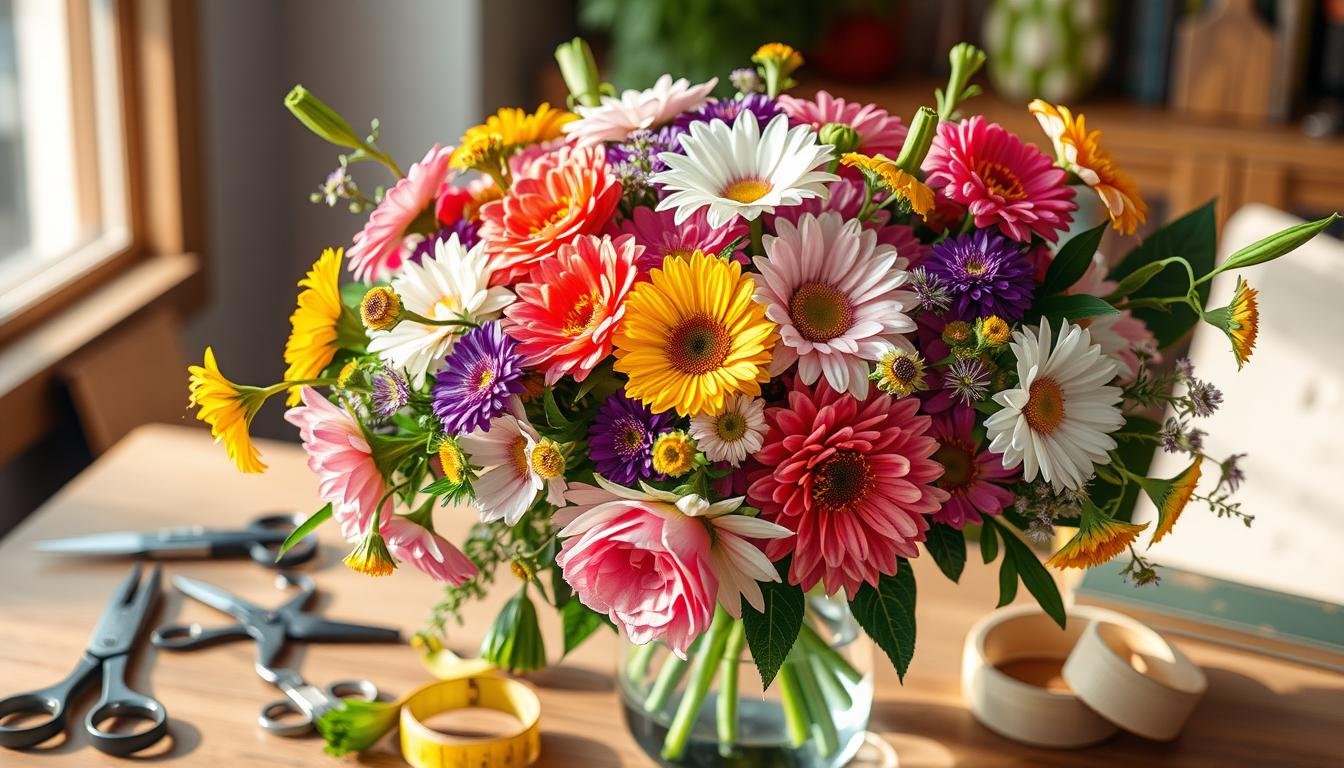
The art of flower arranging is more than just putting flowers in a vase. It’s a blend of creativity, precision, and knowledge. When done well, it can make any space look elegant and beautiful. This guide will share expert tips and techniques to improve your flower arranging skills, whether you’re a pro or just starting out.
Let’s explore how to create stunning bouquets that show off your personal style. We’ll bring the beauty of nature indoors together.
Key Takeaways
- Grasping the fundamentals of floral arrangements enhances your crafting abilities.
- Selecting the right flowers is key for a professional look.
- Understanding color schemes can make your bouquet stand out.
- Preparation and the right tools are essential for smooth arrangements.
- Learn how to make your flowers last longer.
- Discover ways to mix different stems and textures for eye-catching displays.
Understanding the Basics of Floral Arrangement
Learning the basics of floral arrangement is key for anyone into floristry. It involves knowing the types of flowers, color schemes, and the tools needed for preparation.
Choosing the Right Flowers
Choosing the right flowers is the first step in floral arrangement. Think about the occasion, the person’s taste, and the flower’s meaning. Also, pick flowers that match in size and type.

Determining Color Schemes
Choosing the right colors is vital in floristry. Pick colors that go well together. For example, a single color can look elegant, while different colors can add excitement. Knowing color theory helps a lot.
Preparation and Tools Needed
Good flower arrangement starts with the right tools. You’ll need scissors, wire cutters, floral tape, and a strong vase. These tools help make your arrangement look great and last longer.
| Tool | Purpose |
|---|---|
| Floral Scissors | Cutting stems at an angle for better water absorption |
| Wire Cutters | Trimming thick stems and floral wires |
| Floral Tape | Securing flowers and greenery in place |
| Vase | Holding the arrangement securely |
Mastering these techniques and using the right tools helps create stunning floral designs.
Essential Tips for Arranging Flowers
Arranging flowers is more than just putting blooms in a vase. It needs detail, creativity, and secret tips from pros. Here are key tips to improve your skills.

First, think about your design’s size. A good rule is to make your arrangement’s height at least 1.5 times the vase’s height. This ensures a balanced look.
Then, layering is key. Start with greenery as a base. Next, add big flowers, then smaller ones for texture. This layering is a top secret in flower arranging.
Let’s look at some common techniques in the table below:
| Technique | Description |
|---|---|
| Layering | Building a base with greenery and adding focal flowers |
| Color Blocking | Group similar colored flowers to create distinct sections |
| Asymmetry | Arrange flowers to shift weight and create visual interest |
Also, make sure flowers have room to breathe. Too many flowers can make each one look worse and shorten their life. Lastly, turn your arrangement as you work to check for balance.
By using these tips, you can make your flower arrangements better. They will impress everyone, whether for your home or special events. Learning these techniques will make your arrangements always look great.
Selecting the Perfect Vase
Choosing the right vase is key for a stunning bouquet display. You need to think about the vase’s size, shape, and style. This ensures it fits your arrangement perfectly.
- Size and Shape: The vase should fit the flowers’ height and volume. A tall vase is great for long-stemmed flowers. A short, wide vase is best for fuller arrangements.
- Material of the Vase: The vase material should match the flowers. Clear glass vases are versatile and let the flowers shine.
- Proportion and Scale: The vase must be the right size for the flowers. A vase that’s too big or too small can mess up the look.
| Aspect | Tip |
|---|---|
| Size | Choose a vase that’s between one-half to two-thirds the height of the tallest flower stem for balanced proportions. |
| Shape | Think about the flower arrangement style. A round vase is good for symmetrical designs. A vase with a narrow neck is better for spreading, informal bouquets. |
| Material | Pick materials that match or enhance your flower’s look. Metal adds a modern touch, while ceramic gives a classic feel. |
| Color | Neutral-colored vases let the flowers be the main focus. Brightly colored vases can make bold statements. |
In conclusion, choosing the right vase can make your bouquet display stand out. Remember these tips when creating your next floral masterpiece.
Choosing Fresh Flowers for Your Bouquets
Getting the best blooms for your bouquets starts with picking quality flowers. It’s important to check each flower carefully and use seasonal blooms. This way, you can make stunning and lasting bouquets.
Inspecting Flower Quality
To pick the freshest flowers, we need to be careful. First, look at the petals. They should be firm and brightly colored. If petals are wilted or off-color, the flowers are old.
Then, check the stems. Good flowers have strong, flexible stems without damage. Also, the leaves should be green and healthy, not yellow or brown.
Lastly, smell the flowers. Fresh ones smell good, while old ones might not or smell bad. By doing these checks, we can find the freshest flowers for our bouquets.
Using Seasonal Flowers
Using seasonal flowers is good for both looks and the planet. Seasonal flowers are at their best because they grow naturally. This means they are vibrant and strong.
Seasonal flowers also help local farmers and cut down on carbon emissions. By choosing flowers that match the season, we make beautiful, eco-friendly bouquets.
| Season | Flowers | Benefits |
|---|---|---|
| Spring | Tulips, Daffodils, Cherry Blossoms | Fresh, vibrant colors, supports local growers |
| Summer | Sunflowers, Roses, Lilies | Peak bloom, strong stems, vibrant hues |
| Fall | Chrysanthemums, Dahlias, Marigolds | Rich colors, hearty blooms, seasonal freshness |
| Winter | Poinsettias, Amaryllis, Holly | Festive appeal, supports local growers, refreshing scent |
By focusing on flower quality and using seasonal blooms, we can make our bouquets better. They will stay fresh and beautiful for longer.
Creating Visual Balance in Your Arrangement
Getting visual balance in arrangements is key to a stunning floral display. The height of stems is critical, with the tallest at the back for balance. The rule of thirds is a great way to keep things even, dividing the display into three parts.
Evenly spreading flowers and foliage is vital to avoid a lopsided look. This ensures your arrangement doesn’t look too heavy or uneven. Mixing flower sizes and types adds depth and beauty to your display.
Here are some practical flower arranging ideas for balance:
- Alternate flower heights for a natural look.
- Use foliage to fill gaps and make the arrangement fuller.
- Place focal flowers strategically to catch the eye.
Let’s compare two key techniques in the table below:
| Technique | Description |
|---|---|
| Rule of Thirds | Divides the arrangement into three balanced sections: base, middle, and upper. |
| Volume Distribution | Evenly spreads flowers and foliage to achieve harmony and avoid top-heaviness. |
Using these flower arranging ideas can make your displays look great and professional. Focus on the height and volume to master visual balance in arrangements. This way, your floral creations will be both captivating and harmonious.
Incorporating Different Stems and Textures
Creating stunning floral arrangements is more than just picking beautiful flowers. It’s about mixing different stems and textures. This makes your bouquets look sophisticated. We’ll show you how to mix flower types and greens for amazing results.
Using Fillers and Greens
Fillers and greens add volume and depth to your arrangements. They create a lush background that highlights the main flowers. From delicate ferns to strong eucalyptus, each adds its own texture and color.
- Greenery like eucalyptus and ferns softens bold blooms.
- Ornamental grasses add a whimsical touch.
- Berry sprigs bring color and texture.
Mixing Flower Types
Mixing different flower types creates stunning bouquets. The contrast between blooms makes the arrangement more interesting. Pairing big, bold flowers with smaller ones creates balance.
- Start with a focal flower, like a rose or peony.
- Add supporting blooms like daisies or tulips to fill gaps.
- Include unique flowers like orchids or anemones for interest.
By carefully mixing these elements, you’ll make bouquets that are sophisticated and enchanting. Emphasizing textured designs and diverse greenery turns our floral creations into true art.
How to Make Your Flowers Last Longer
To keep your flowers fresh, you need to pay attention and provide the right conditions. By following the right flower care steps, you can make your arrangements last longer. This way, you can enjoy their beauty for more time.
Proper Placement and Care
Where you place your flowers is very important. Keep them away from direct sunlight and heat. These can make them wilt faster. Also, don’t put your flowers near fruits that are ripening, as they give off ethylene gas.
Watering and Feeding Your Flowers
Watering and feeding your flowers right is key to keeping them fresh. Change the water in the vase every couple of days. This keeps the stems hydrated and free from bacteria.
Adding flower food to the water gives them the nutrients they need. It also keeps them looking good. Regular care, like trimming the stems at an angle, helps them absorb water better. This supports floral longevity.
Styling Tips for Your Floral Arrangements
Making a beautiful floral arrangement is an art. We can turn simple flowers into stunning bouquets with the right tips. We’ll look at how to make different shapes and mix colors for perfect harmony.
Creating Different Bouquet Shapes
The shape of a bouquet matters a lot. Knowing about different shapes helps us pick the right one for any event. Here are some popular ones:
- Round Bouquets: These are classic and versatile. Ideal for formal events, they are compact and symmetrical, giving a polished look.
- Cascade Bouquets: Perfect for dramatic flair, these bouquets have a waterfall effect, with flowers flowing downwards.
- Posy Bouquets: Small and delicate, posy bouquets are light and easy to carry, often used by bridesmaids.
Combining Colors and Shades
Choosing the right colors for your bouquet is key. The right mix can set the mood and make the flowers more impactful. Here are some tips:
- Complementary Colors: Pair colors opposite each other on the color wheel, such as blue and orange, for bold and striking arrangements.
- Analogous Colors: Use colors next to each other on the color wheel, like red, orange, and yellow, for a harmonious, cohesive look.
- Monochromatic Schemes: Choose varying shades of a single color for a sophisticated and elegant bouquet.
By following these floral styling tips, we can make stunning arrangements. They will surely impress everyone.
DIY Floral Design Ideas
If you want to add your own special touch to flower arrangements, our DIY designs are great. These projects let you be creative and add a unique charm to any room.
Start with simple yet elegant projects like mason jar bouquets or terrariums. These creative flower projects need just a few materials but look amazing.
For more complex designs, try making flower wreaths or centerpieces. Using fresh seasonal flowers not only looks great but also lasts longer.
Here are some essential tools you’ll need for these DIY floral designs:
- Floral scissors
- Floral tape
- Wire cutters
- Vases or containers
- Oasis foam
Having these tools ready will make your project go smoothly and avoid any last-minute problems.
We’ve also listed some benefits to keep you excited:
| Benefit | Details |
|---|---|
| Cost-Effective | DIY projects are often cheaper than buying pre-made ones. |
| Personalization | You can make your designs your own, matching your style. |
| Creative Outlet | They let you be creative and can be very relaxing. |
| Unique Gifts | Handmade flower designs make great, memorable gifts. |
These DIY floral designs and creative flower projects open up a world of possibilities. Mix different flowers, try out different textures, and let your creativity shine. Happy arranging!
Professional Flower Arranging Techniques
In the world of floristry, knowing how to arrange flowers is key. It’s what makes displays stand out. Let’s explore some top techniques to take your flower designs to the next level.
Layering is a skill many florists master. It involves using flowers of different heights to add depth. For example, tall flowers like delphiniums go in the middle. Then, mid-height blooms like roses are added, followed by shorter ones like daisies.
Using structural techniques is also vital. It keeps your arrangements looking good and stable. Tools like floral foam or wire help keep the design in place, even when moving it.
Color harmony is another critical aspect. Knowing color theory helps mix colors that look great together. Using colors next to each other on the color wheel or three colors spaced evenly can create stunning effects.
Don’t forget about negative space. Leaving some areas empty makes each flower pop. It prevents the arrangement from looking too busy and adds a touch of elegance.
| Advanced Floristry Techniques | Benefits |
|---|---|
| Layering | Creates depth and dimension |
| Structural Techniques | Ensures stability and integrity |
| Color Harmony | Achieves aesthetically pleasing compositions |
| Negative Space | Emphasizes focal points and adds elegance |
By using these advanced techniques, you can make flower arrangements that look like they’re from a top florist. Keep learning and trying new things to become a true master in this beautiful art.
Creative Floral Displays for Special Occasions
Creating floral displays for events is both an art and a science. It’s a joy to make these stunning arrangements. They can change any venue, like a wedding, anniversary, or holiday party. By knowing special occasion floristry, we can make each display fit the theme and what the occasion means to the people involved.
Weddings are special, and the flowers should tell the couple’s story. From beautiful bouquets to detailed table centerpieces, every piece should match the theme. It’s important to use the couple’s favorite flowers or colors to make it personal.
Anniversaries need elegance and a nod to the past. We can use flowers from the season they got married or the ones from their wedding. This brings back happy memories and celebrates their love.
Holiday displays should be bright and festive. We use seasonal flowers, traditional colors, and symbols to bring the holiday spirit to life. For example, poinsettias and evergreens for Christmas or sunflowers and pumpkins for fall events capture the holiday’s essence.
By focusing on theme and personal touches, we make each floral display stunning and meaningful. Creativity and customization in special occasion floristry make every event unforgettable. It makes the moments even more magical and memorable.
Conclusion
We hope this guide has given you the tools to make beautiful flower arrangements. It covers the basics and advanced techniques. Each part aims to inspire and teach you.
Choosing the right flowers and colors is key. Using different stems and textures adds depth. Don’t forget to care for your flowers to make them last.
Now, it’s time to use what you’ve learned. Whether it’s a simple bouquet or a grand centerpiece, enjoy the process. Celebrate the beauty of flowers in your arrangements.
FAQ
What are some essential tips for arranging flowers like a pro?
First, learn the basics of floral arrangement. Choose the right flowers and pick colors that match. Use the right tools too.
Think about the vase you pick. Make sure your arrangement looks balanced. Add different stems and textures for more interest.
What should I consider when choosing flowers for my arrangement?
Think about the occasion and your taste. Consider where you’ll put the arrangement. Choose fresh, seasonal flowers for best results.
For more tips, check out our sections on picking flowers and selecting fresh blooms.
How do I create a visually balanced floral arrangement?
Balance your arrangement by considering height, volume, and proportion. Use the rule of thirds for better color and shape distribution. Find more tips in our section on visual balance.
What are some advanced techniques for professional flower arranging?
Try layering flowers and using wire and floral foam for support. Experiment with asymmetrical designs for a unique look. Learn more in our section on advanced techniques.
How can I incorporate different stems and textures into my bouquet?
Use a mix of focal flowers, fillers, and greenery. Add different textures like leafy greens and hardy stems. This adds depth and interest. For more ideas, see our section on stems and textures.
What are the best practices for making flowers last longer?
Keep your flowers fresh by placing them right, watering them, and using preservatives. Avoid sunlight and drafts. For more care tips and common mistakes, check our section on extending bloom life.
Are there any DIY floral design ideas I can try at home?
Yes, there are many DIY floral projects for home decor and centerpieces. These ideas are fun and easy for all skill levels. For inspiration and steps, visit our DIY floral design ideas section.
How do I choose the perfect vase for my flower arrangements?
Choose a vase that matches your flowers’ style, size, and color. Think about the vase’s material, shape, and size. For more guidance, see our section on vase selection.
What are some floral styling tips for creating different bouquet shapes?
Try different shapes like round, cascading, or hand-tied. Mix colors and shades to fit the mood or theme. For more tips, check our section on styling tips.
How can I design creative floral displays for special occasions?
Focus on the event’s theme and personal touch. Use unique flowers, colors, and decorations. For advice on special occasions, see our section on creative displays.


